
Sunscreen for Pigmentation: What It Can and Can't Do
Sunscreen prevents new pigmentation; it does not fade the dark spots you already have. Daily broad-spectrum SPF stops ultraviolet light from re-triggering the melanin that drives spots, which is why it is the foundation of any pigmentation plan. Fading existing marks needs active ingredients or a clinic treatment, not sunscreen on its own.
Does sunscreen remove pigmentation?
No. Sunscreen is a shield, not a corrector, so it cannot lift the pigment already sitting in your skin. What it does is stop the process that made the spots in the first place, and keep new ones from forming. Any page that tells you a sunscreen will erase dark spots is selling you something the ingredient cannot do.
This distinction matters because it changes what you expect. Worn every day, sunscreen lets the marks you have fade slowly on their own as skin renews, and it stops fresh ones arriving. It is doing the quiet half of the work, the half that every brightening active depends on.
How sunscreen prevents new pigmentation
Pigmentation begins when light reaches the skin and signals its melanocytes to make more melanin. Ultraviolet light is the strongest trigger, and a broad-spectrum sunscreen blocks it before that signal is sent. The American Academy of Dermatology places daily sunscreen at the base of both preventing and clearing dark spots for exactly this reason.
Skin renews itself roughly every four to six weeks, replacing older, pigmented cells with new ones. When fresh UV damage keeps re-triggering melanin, that renewal never gets ahead of the pigment. Remove the trigger with daily protection, and the balance tips the other way: pigment leaves faster than it arrives. This is why sunscreen is described as prevention that also, indirectly, helps existing marks fade.
UV is only half the story: visible light and melasma
For medium and deep Indian skin, ultraviolet is not the only light that darkens the skin. Visible light, the ordinary light you can see, also drives pigmentation, and it is a known aggravator of melasma and post-inflammatory marks. A standard SPF 50+ sunscreen is measured against UV, not visible light, so it leaves this second trigger largely uncovered.
The research here is clear. A study in the Journal of Drugs in Dermatology found that iron-oxide-containing tinted formulations protected skin of colour against visible-light-induced pigmentation, where an untinted SPF 50+ did not. A randomised study of melasma patients through summer likewise found a visible-light-protective tinted sunscreen outperformed an untinted one. If your pigmentation is melasma, the tint is not cosmetic; it is part of the protection.
What to look for in a sunscreen for pigmentation
Start with the basics that block the main trigger: broad spectrum, SPF 50, and PA++++, worn every morning and topped up through the day. Under-application is the usual reason a high number underperforms, so use enough to cover the skin evenly rather than a thin swipe. This is the layer that prevents new UV-driven spots for everyone.
If your concern is specifically melasma or you have medium-to-deep skin marking easily, add visible-light protection on top of that, which in practice means a tinted formula carrying iron oxides. An untinted sunscreen, however well it scores on SPF, does not filter visible light. Matching the sunscreen to the kind of pigmentation you have is the part most product lists skip.
Where Artisun fits, honestly
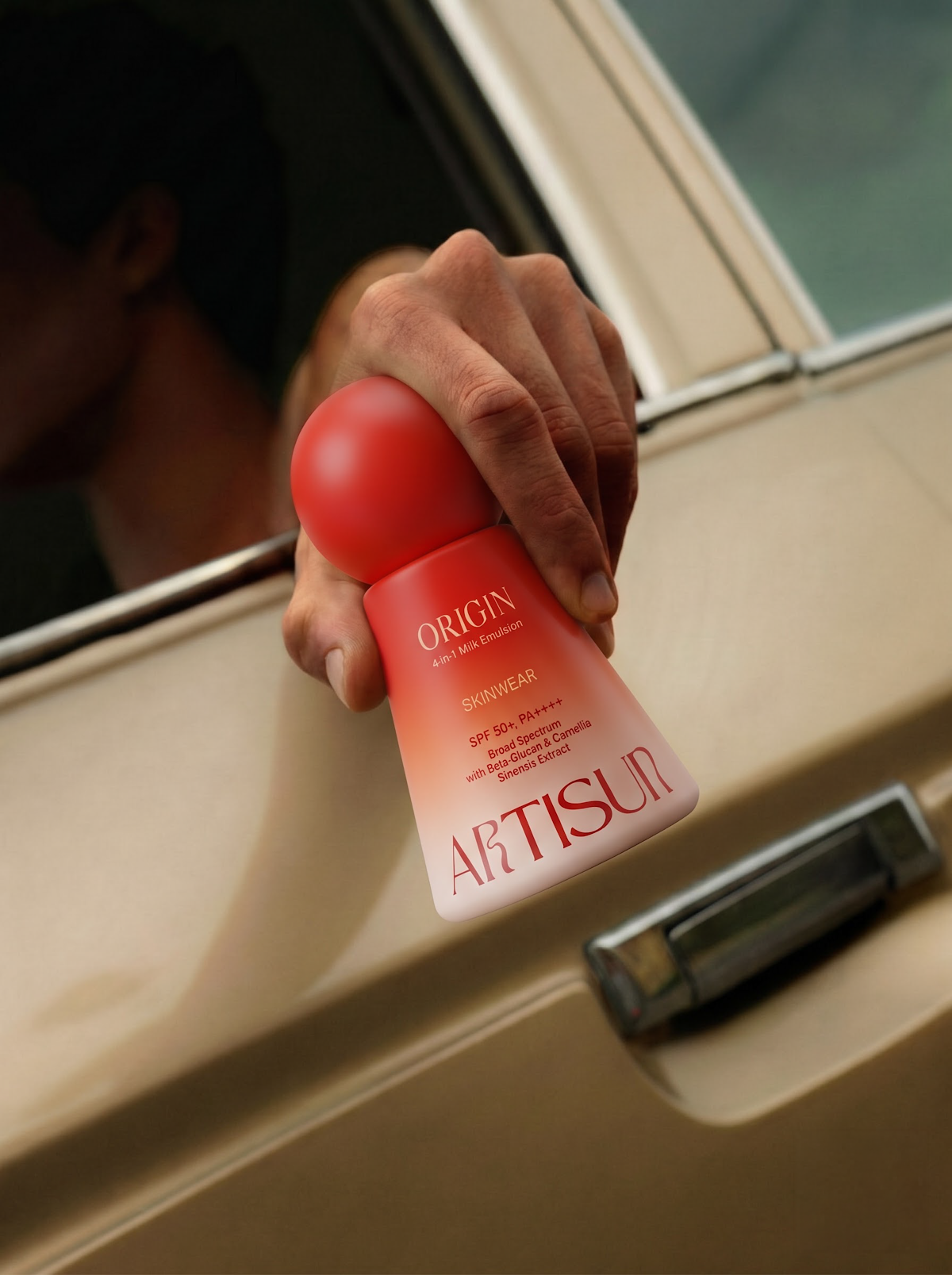
Origin is a broad-spectrum SPF 50+ PA++++ built to be worn every day, which is the job that prevents new UV-driven pigmentation. It uses organic filters and no zinc or titanium, so it protects without a white cast on deeper skin, and a daily layer is the foundation any pigmentation routine is built on.
What Origin does not do is claim to fade the spots you already have, or to filter visible light. It is untinted, so if your pigmentation is melasma driven partly by visible light, pair daily broad-spectrum wear with a tinted, iron-oxide layer for that specific protection. Sun care organised around your weather and your skin works best when the claims stay honest about what a sunscreen can and cannot reach.
Frequently asked questions
Does sunscreen remove dark spots?
No. Sunscreen prevents new dark spots and stops existing ones from being re-triggered, but it does not lift the pigment already in your skin. Fading existing marks needs brightening actives or a clinic treatment; sunscreen is the protective base that lets them work.
Can sunscreen fade pigmentation on its own?
Only indirectly. Worn daily, it stops fresh UV damage, so as skin renews over four to six weeks, existing pigment can fade faster than new pigment forms. It will not erase spots by itself, but without it every other step in a pigmentation routine is undone.
Which SPF is best for pigmentation?
A broad-spectrum SPF 50 with PA++++, worn every day and reapplied through the day. Broad spectrum matters because it covers both UVB and the UVA that drives pigmentation, and PA++++ marks the highest UVA protection band.
Does sunscreen help with melasma?
Yes, and the type matters. Melasma is worsened by visible light as well as UV, so a tinted sunscreen with iron oxides protects it better than an untinted SPF alone. Daily wear of a visible-light-protective sunscreen is shown to reduce melasma recurrence.
How long before sunscreen helps my pigmentation?
There is no quick change. Sunscreen works by prevention, so its benefit shows over weeks to months as skin renews and no new pigment is triggered. Consistency every day matters far more than any single application.
Does Artisun sunscreen help with pigmentation?
Origin is a daily broad-spectrum SPF 50+ PA++++, so it helps prevent new UV-driven pigmentation, which is the foundation of any plan. It is untinted, so it does not filter visible light; for melasma driven by visible light, add a tinted, iron-oxide formula for that protection.
Written by Dr. Reetu Durga, Aesthetician and Founder, Skulpted by Kan. Last updated 25 September 2026.
Sources
American Academy of Dermatology, How to fade dark spots in darker skin tones.
Journal of Drugs in Dermatology, Impact of Iron-Oxide Containing Formulations Against Visible Light-Induced Skin Pigmentation in Skin of Color Individuals.
Comparison of Visible Light-Protective Tinted Sunscreen to Untinted Sunscreen to Protect Melasma Patients During Summer: A Prospective Randomized Investigator-Blinded Study (2025).